With the rapid development of the electric vehicle industry, battery system operating voltages have generally exceeded 300 V and are even evolving toward 800 V high-voltage platforms, far above the safe voltage threshold (IEC 61140 specifies 60 V DC / 25 V AC). Against this background, the electrical safety of battery packs has become a top priority. International organizations such as UL and IEC have established stringent safety standards. Among them, UL 2580 is widely recognized in the North American market as a safety standard for lithium-ion batteries used in electric vehicles, providing the industry with an important basis for testing.
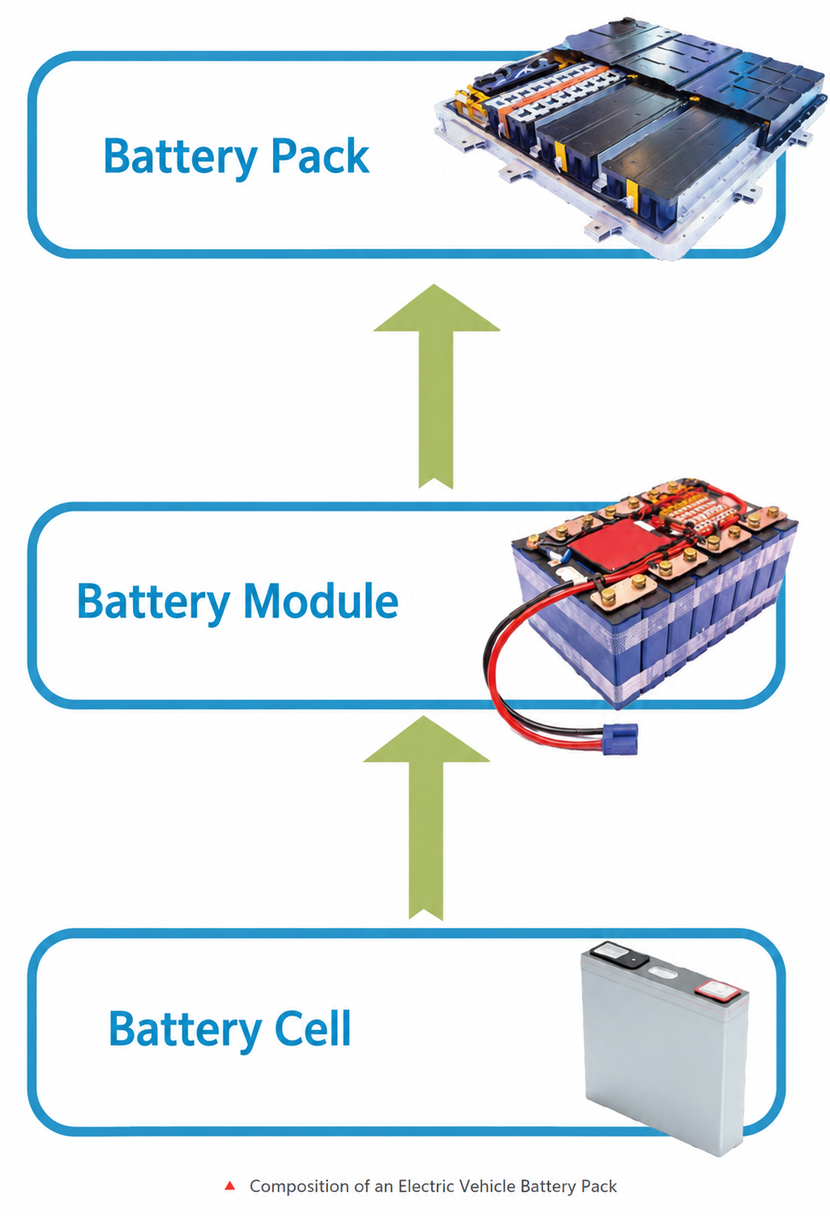
Before discussing the details of battery testing, let us briefly introduce the structure of an electric vehicle battery pack. A complete battery pack consists of several modules, and each module is composed of multiple battery cells. If any defect occurs in a single module or cell, it may compromise the entire battery pack and create potential safety risks. Therefore, most manufacturers perform insulation resistance testing on battery cells to identify abnormalities and ensure the integrity of the internal insulation. Subsequently, a dielectric withstand voltage test is performed between the battery module terminals and the enclosure to verify the safety of the assembly and structure.
UL 2580 is a safety standard developed by Underwriters Laboratories (UL) specifically for lithium-ion batteries used in electric vehicles. It is widely adopted in the North American market and also serves as one of the testing references for many international automobile manufacturers. Under this standard, dielectric withstand voltage testing is primarily used to ensure correct battery pack assembly and prevent insulation failures.
Dielectric Withstand Voltage Test
This test requires applying twice the rated DC voltage (typically 600 Vdc to 1200 Vdc) between the enclosure and the positive and negative terminals of the battery for 60 seconds to verify that the battery pack can withstand high voltage without electrical breakdown.
In addition, assessing the potential risk of electric shock is another important part of electric vehicle battery testing. This is verified by applying a test voltage between accessible metal parts of the vehicle (such as the charging connector) and the positive and negative terminals of the battery.
By carrying out these stringent tests, manufacturers can ensure that batteries operate safely in electric vehicle systems.
If a battery pack fails the dielectric withstand voltage test or insulation test, the following risks may occur:
-
Users may suffer electric shock when touching metal parts.
-
Leakage-current alarms may occur frequently during vehicle operation, and the high-voltage interlock may even disconnect.
-
Long-term current leakage inside the battery may reduce vehicle energy efficiency and driving range.
-
Safety issues may prevent the product from obtaining regulatory certification, making it ineligible for market release.
Therefore, whether for R&D validation or mass-production testing, electrical safety testing is a critical process.



 400-616-5217

 Location:



 粤公网安备 44030502008393号